Matte vs glossy print depends on how your materials will be used. Matte reduces glare, improves readability, and works best for text-heavy or frequently handled items. Glossy enhances color vibrancy and is ideal for image-focused designs that need to stand out. If your priority is clarity and everyday use, choose matte. For bold visuals and impact, glossy is the better option.
When it comes to printed materials, the details matter more than many people realize. A brochure, business card, or flyer is often the first physical impression your brand makes, and it can either elevate that impression or make it fall flat.
According to Harvard Business Review, 82% of consumers trust print advertisements more than any other medium. That means every design choice, including your print finish, plays a vital role in how your brand is perceived.
The choice between glossy vs matte finish printing is not just about appearance. It also affects how your prints feel in someone’s hands, how long they last, and how professional they look under different lighting conditions.
Understanding the difference between matte and glossy prints helps you make informed decisions that align with your goals. In this post, our Reno printing service experts will explore what sets these finishes apart and how they shape the look, feel, and impact of your printed materials.
Understanding the Basics: Matte Finish vs Glossy
Before you can choose the right option for your project, it helps to understand what makes each printing finish unique. Both have their place, but knowing the difference between matte and glossy print will help you match the right style to your brand’s needs.
What is a Glossy Finish?
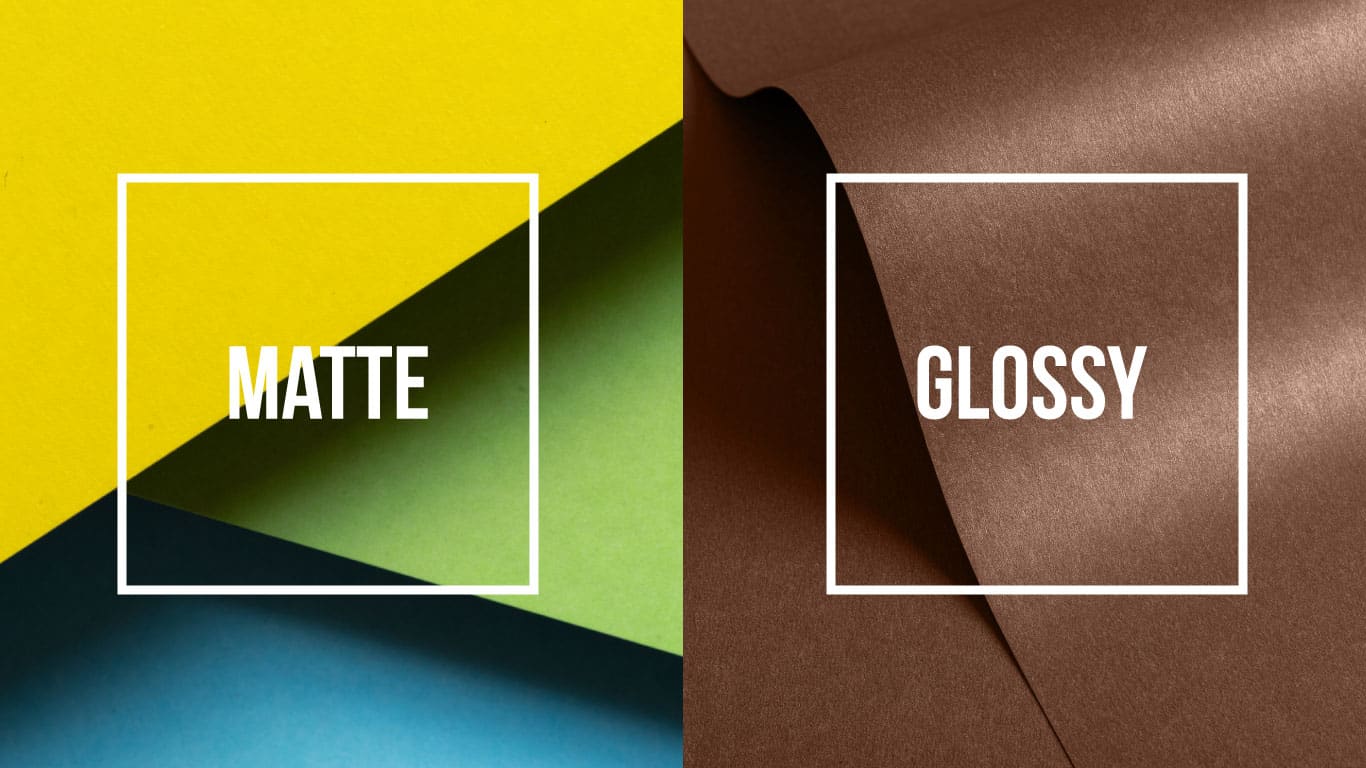
A glossy finish provides a shiny, reflective coating that enhances colors and sharpness. The surface is smooth and polished, which makes photos and graphics appear more vibrant.
Glossy paper is often used for marketing materials such as photo prints, postcards, or catalogs because it creates a professional and eye-catching appearance. If your project depends on vivid colors and strong visual impact, glossy is a go-to choice.
What is a Matte Finish?
A matte print finish has a smooth, non-reflective surface that reduces glare and improves readability. The texture feels soft and professional, offering a more subtle and refined look compared to glossy.
Matte paper is ideal for projects where elegance and sophistication matter. Business cards, text-heavy brochures, and invitations often use matte finishes because they deliver a clean impression without distracting reflections.
Glossy Finish Explained
Choosing a glossy finish can elevate your marketing strategy, but it’s essential to understand where it excels and where it falls short.
Advantages of Glossy Prints
One of the main benefits of glossy prints is their ability to make colors pop. Photographs, artwork, and marketing materials printed on glossy paper appear sharper and more striking.
This finish works exceptionally well for printing projects that need visual impact, such as posters or product brochures. It draws the eye and communicates a high-quality print feel.
Disadvantages of Glossy Prints
The same reflective surface that makes glossy attractive can also be a drawback. Fingerprints show easily, and glare under bright lights can make text harder to read.
Glossy paper can also be less durable when handled frequently. Over time, repeated handling may reduce its polished look.
Matte Finish Explained
A matte finish offers a different kind of value compared to glossy. Here are some of its pros and cons.
Advantages of Matte Prints
Matte paper is excellent for readability because the lack of reflection makes text stand out. It also creates a sense of understated elegance, which is ideal for professional branding.
Many companies even compare uncoated vs matte business cards to decide how much polish they want their brand to show, since matte adds a refined coating while uncoated delivers a raw, natural feel.
Disadvantages of Matte Prints
One potential drawback of matte prints is that colors may appear softer compared to glossy finishes. The muted effect can reduce the impact of high-energy designs that rely on bright tones.
Matte finishes may also lack the “wow factor” needed for highly visual marketing campaigns.
Matte vs Glossy Prints: Key Differences
Here’s a look at the differences between matte and glossy prints side by side:
Visual Appeal and Color Depth
Glossy prints provide brighter colors and stronger contrasts, while matte prints have a softer, more natural appearance. Your choice depends on whether you want striking visuals or subtle sophistication.
Texture and Feel of the Print
Glossy paper feels sleek and smooth, while matte paper offers a velvety finish with more grip. This tactile difference can influence how professional your materials feel in a customer’s hands.
Durability and Resistance to Marks
Matte paper hides fingerprints and smudges better. Glossy, however, may be slightly more resistant to moisture if handled carefully.
Cost Comparison Between Matte and Glossy Finish
Matte and glossy finishes are usually comparable in cost, though pricing can vary slightly based on volume, paper quality, and print method. Special coatings or custom options may increase the price.
In general, neither finish is dramatically more expensive. As such, decisions can focus more on functionality and brand image, rather than marketing budgets.
The Best Print Finish for Different Use Cases
- Glossy: Best for marketing flyers, photos, catalogs, posters with vibrant imagery, promotional postcards, and projects handled through a banner printing service.
- Matte: Works well for business cards, professional stationery, restaurant menus, invitations, and informational brochures with a focus on readability.
Matte vs Glossy: Which is Better for Your Needs?
Which Lasts Longer: Glossy or Matte?
Both finishes are durable, but matte may hold up better against fingerprints and repeated handling. Glossy can be more resistant to water but may lose its clean look over time if smudged.
Does Matte or Glossy Look More Natural?
A matte finish tends to look more natural because it avoids glare and reflection. This can make it a better choice for professional settings or brands that want to appear grounded and approachable.
Why Choose Glossy Over Matte?
Glossy is perfect for projects that require vibrant colors and high visual impact. If your goal is to draw attention, glossy is hard to beat.
Why Choose Matte Over Glossy?
Matte is better for readability, subtle branding, and professional elegance. It is also practical for everyday use since it resists fingerprints.
Expert Tips for Choosing Between Matte and Glossy Finish
Selecting a matte vs glossy print finish benefits from strategic consideration. As a provider of printing services in Reno, we always suggest these tips:
Consider Your Audience and Purpose
Think about the end user for your prints. For high-end clients or audiences who value sophistication, matte may resonate best. For youthful or visually-led campaigns, glossy supports attention-grabbing layouts.
Match Finish to Your Brand Identity
If your brand is sleek or tech-focused, glossy finishes can amplify that message. For classic, established, or luxury brands, matte finishes align with a timeless, reliable image.
Think About Lighting Conditions
Glossy prints tend to reflect overhead lighting. If your materials will be used at trade shows, events, or under bright lights, matte offers easier readability and a more consistent look.
Balancing Budget with Print Quality
While the cost difference is minor, consider whether special coatings or premium finishes are necessary for your goals. Focus on what will best serve your audience and message rather than defaulting to the most eye-catching option.
Find the Perfect Print Finish for Your Project
Matte and glossy finishes each have unique strengths. Glossy offers bold visuals and vibrancy, while matte provides sophistication and readability. The right choice depends on your project goals, brand identity, and how the material will be used.
At Digiprint, we help businesses bring their ideas to life with the perfect finish. Whether you need glossy flyers that stand out, matte business cards that communicate sophistication, or a combination of both, our printing services in Reno, NV, have you covered.
Ready to print with impact? Contact us today to order your custom matte or glossy prints.