Ever picked up a booklet that felt cheap or awkward to hold? Chances are, the issue wasn’t the design; it was the binding.
Choosing between perfect binding and saddle stitch binding might seem like a small production detail, but it has a big impact on how your project looks, feels, and lasts. The right choice makes your catalog or magazine feel high-end and durable. Conversely, the wrong one can make it fall flat (literally).
Before you hit “print,” here’s what to know about each binding style and how to pick the one that fits your project best.
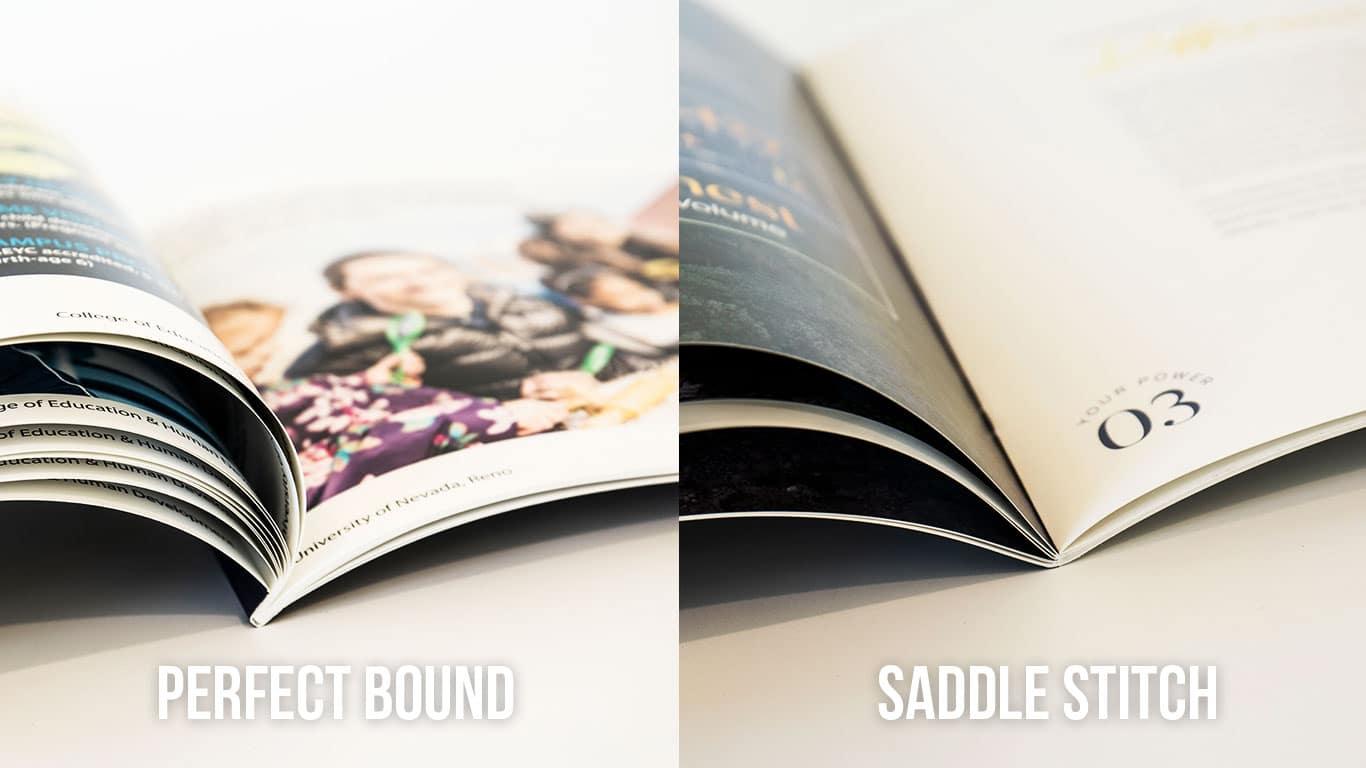
Table of Content
Perfect Bound vs Saddle Stitch: A Detailed Comparison
Pros and Cons of Each Binding Type
How to Choose the Right Binding for Your Project
What Is Perfect Binding?
Perfect binding is the method you see on softcover books, thick magazines, and high-end catalogs. When people ask what perfect bound book binding is, they’re usually referring to this exact technique.
A perfect-bound book is made by stacking all the pages together, trimming the edges, and gluing the spine with a strong adhesive. A heavier, soft cover wraps around the spine to create the smooth, square edge you see on most softcover books.
You’ll see perfect binding used for:
Because of the square spine and strong adhesive, perfect binding book projects look more refined and withstand wear and tear well over time. They’re great for thicker documents in need of a solid, durable structure and a premium finish.
What Is Saddle Stitching?
Saddle stitch binding is one of the simplest and most affordable ways to bind booklets. It works by folding sheets in half and stapling them along the fold, usually with two staples right in the center. If you’ve ever flipped through a slim magazine, event program, or local newsletter, chances are you’ve held a saddle-stitched piece.
Saddle stitching is ideal for projects with lower page counts. If you’re looking up what page count is best for saddle stitch binding, the general guideline is 64 pages or fewer, depending on paper weight.
It’s commonly used for:
- Booklets
- Menus
- Programs
- Newsletters
- Small catalogs
In the saddle stitch vs perfect bound conversation, this option stands out for being fast, lightweight, and budget-friendly. It’s great when you’re on a deadline, working with fewer pages, or producing materials that don’t need to sit on a shelf long-term.
Perfect Bound vs Saddle Stitch: A Detailed Comparison
To decide between perfect-bound vs saddle-stitch, it helps to check how they compare in design, durability, thickness, and cost. Each method has its strengths, but your project needs determine the better fit.
Design and Appearance
Perfect-bound books typically look more polished and professional. The square spine gives the piece a clean, bookstore-style finish and allows for spine printing.
Saddle stitch, on the other hand, looks clean and simple. While there’s no spine to print on, the booklets feel lighter and more minimal. The staples also let the pages lie flat and make it easier to read, reference, or write in.
Durability and Longevity
Perfect-bound books hold up better over time because the glued spine and thicker cover add extra strength. They’re designed for repeated use and longer shelf life.
Saddle stitch is reliable for short-term or temporary materials. It’s sturdy enough for everyday handling, but it’s not meant to last as long as a perfect-bound book, particularly if the booklet receives heavy use.
Page Count and Thickness
Page count plays a big role when deciding between saddle-stitched vs perfect-bound books.
Saddle stitch works best for booklets with 64 pages or fewer. Beyond that, the fold becomes bulky, and the staples may not hold as cleanly.
Perfect bound is ideal for thicker pieces. If you’re printing acatalog, workbook, manual, or anything with a higher page count, perfect binding can help keep everything together.
Cost and Production Time
Saddle stitch binding is more affordable and faster to produce. It uses basic materials, fewer steps, and can be finished quickly. They’re best for newsletters, event programs, or smaller booklets on a schedule.
Perfect binding costs a bit more per copy. It requires trimming, gluing, and a heavier cover. The added steps also mean longer production times. But for that higher cost, you get a more premium, durable finish.
Pros and Cons of Each Binding Type
Now that you know what each method is, let’s break down the benefits and drawbacks of each one.
Pros and Cons of Perfect Bound Books
Perfect binding gives printed materials a sleek, durable look that’s ideal for larger projects, but it’s not the best fit for every budget or purpose. Here’s a quick look at the main advantages and drawbacks:
Pros
- Clean, professional appearance
- Printable spine for branding or titles
- Works well for thick catalogs, manuals, or books
Cons
- Costs more than saddle stitch
- Not ideal for short runs or small booklets
- Doesn’t lie flat easily when open
All in all, perfect-bound book binding is best for high-impact, multi-page projects that need to look polished and last a long time.
Pros and Cons of Saddle Stitch Binding
Saddle stitch binding combines simplicity and affordability, making it a go-to choice for smaller publications. Here are some of the top factors to consider:
Pros
- Budget-friendly and fast to produce
- Lays flat for easy reading or writing
- Great for short booklets, programs, and newsletters
Cons
- Limited to lower page counts (under ~64 pages)
- Staples are visible along the fold.
- Less durable for long-term or heavy use
Ultimately, saddle stitch binding is perfect for short, simple pieces, or when you’re on a tighter timeline and budget.
How to Choose the Right Binding for Your Project
Your choice between perfect binding and saddle stitch binding comes down to three things: how many pages you have, how much you want to spend, and how polished you want the finished piece to feel.
Consider Page Count and Project Size
A large part of choosing between the two methods is the page count. Thicker projects like catalogs, manuals, or lookbooks work best with a perfect binding book because the glued spine adds structure and durability. For smaller booklets, saddle stitch binding is usually the better fit.
Match the Binding to the Purpose
Perfect-bound books are typically meant to impress or last, such as annual reports, business catalogs, and high-end marketing materials.
Saddle stitch is better for quick-reference items, including event programs, menus, newsletters, and training handouts.
Balance Presentation with Budget
Cost and turnaround time also shape your decision. Perfect bound takes longer to produce and is priced higher per copy, but looks more premium. Saddle stitch is the more cost-effective option.
Frequently Asked Questions
Let’s Print Your Next Project
Both perfect-bound and saddle-stitch binding methods are excellent choices, just for different needs. In the end, your choice will vary based on how your project will be used, the impression you want to make, and the amount you’re comfortable spending.
If you’re still weighing perfect bound vs saddle stitch, the Digiprint team is ready to guide you. Our printing services in Reno, NV, have helped businesses, schools, nonprofits, and creative teams bring their booklets, catalogs, and magazines to life with the right binding and dependable turnaround times.
Reach out to our Reno printing shop today, and let’s create something you’ll be proud to share.