
Tri Fold (Letterfold / 3-Panel Fold)
A tri fold is the most familiar brochure fold, where a sheet is divided into three equal panels and folded twice so that one panel folds over the other, like a standard letter.
| Spec | Detail |
|---|---|
| Panels | 3 panels per side |
| Standard finished size (Letter) | 3.68" x 8.5" |
| Standard finished size (Legal) | 4.68" x 8.5" |
| Standard finished size (Tabloid) | 5.68" x 11" |
| Recommended flat sheet size | 8.5" x 11" (Letter), 8.5" x 14" (Legal), or 11" x 17" (Tabloid) |
| Common applications | Marketing brochures, menus, sales sheets, informational flyers |
| Design recommendations | Keep key messaging on the front-facing panel, and account for the slight overlap panel being narrower than the other two |
See our custom brochures to start a tri-fold project.


Z Fold (Fan Fold)
A Z fold uses two parallel folds in opposite directions, so the sheet opens in a zig-zag, accordion-like “Z” shape rather than folding one panel over another.
| Spec | Detail |
|---|---|
| Panels | 3 panels per side |
| Standard finished size (Letter) | 3.67" x 8.5" |
| Standard finished size (Legal) | 4.67" x 8.5" |
| Standard finished size (Tabloid) | 5.67" x 11" |
| Recommended flat sheet size | 8.5" x 11" (Letter), 8.5" x 14" (Legal), or 11" x 17" (Tabloid) |
| Common applications | Step-by-step guides, event flyers, self-mailers |
| Design recommendations | Design each panel to work as its own standalone step or section, since the fold reveals panels in sequence rather than one folding underneath another |
Explore our custom brochures for Z fold layouts.
Half Fold (Single Fold)
A half fold is a single fold down the center of a sheet, creating two panels per side. It is the simplest and most common fold style.
| Spec | Detail |
|---|---|
| Panels | 2 panels per side |
| Standard finished size (Letter) | 5.5" x 8.5" |
| Standard finished size (Legal) | 7" x 8.5" |
| Standard finished size (Tabloid) | 8.5" x 11" |
| Recommended flat sheet size | 8.5" x 11" (Letter), 8.5" x 14" (Legal), or 11" x 17" (Tabloid) |
| Common applications | Programs, greeting cards, simple flyers, invitations |
| Design recommendations | Treat the front cover as a stand-alone design, since it is the panel most likely to be seen first |
Learn more about our event programs, a common half fold application.


Parallel Fold (Double Parallel / 4-Panel Fold)
A parallel fold uses two folds running in the same direction, creating four narrow panels per side that stack neatly on top of each other.
| Spec | Detail |
|---|---|
| Panels | 4 panels per side |
| Standard finished size (Legal) | 3.5" x 8.5" |
| Standard finished size (Tabloid) | 4.25" x 11" |
| Recommended flat sheet size | 8.5" x 14" (Legal) or 11" x 17" (Tabloid) |
| Common applications | Rack cards, direct mail inserts, compact product guides |
| Design recommendations | Because panels are narrow, keep text minimal per panel and avoid designs that need to be read across the fold |
See our custom brochures for parallel fold options.
Open Gate Fold (Single Open Gate Fold)
An open gate fold has two smaller outer panels that fold inward toward the center of a larger interior panel. When opened, the two outer panels reveal the full interior spread.
| Spec | Detail |
|---|---|
| Panels | 2 small panels and 1 large panel per side |
| Standard finished size (Letter) | 5.5" x 8.5" |
| Standard finished size (Legal) | 7" x 8.5" |
| Standard finished size (Tabloid) | 8.5" x 11" |
| Recommended flat sheet size | 8.5" x 11" (Letter), 8.5" x 14" (Legal), or 11" x 17" (Tabloid) |
| Common applications | Invitations, presentation pieces, reveal-style marketing brochures |
| Design recommendations | Use the two smaller panels to build anticipation before revealing the main message on the larger interior panel |
Ask about open gate fold options through our print design services.
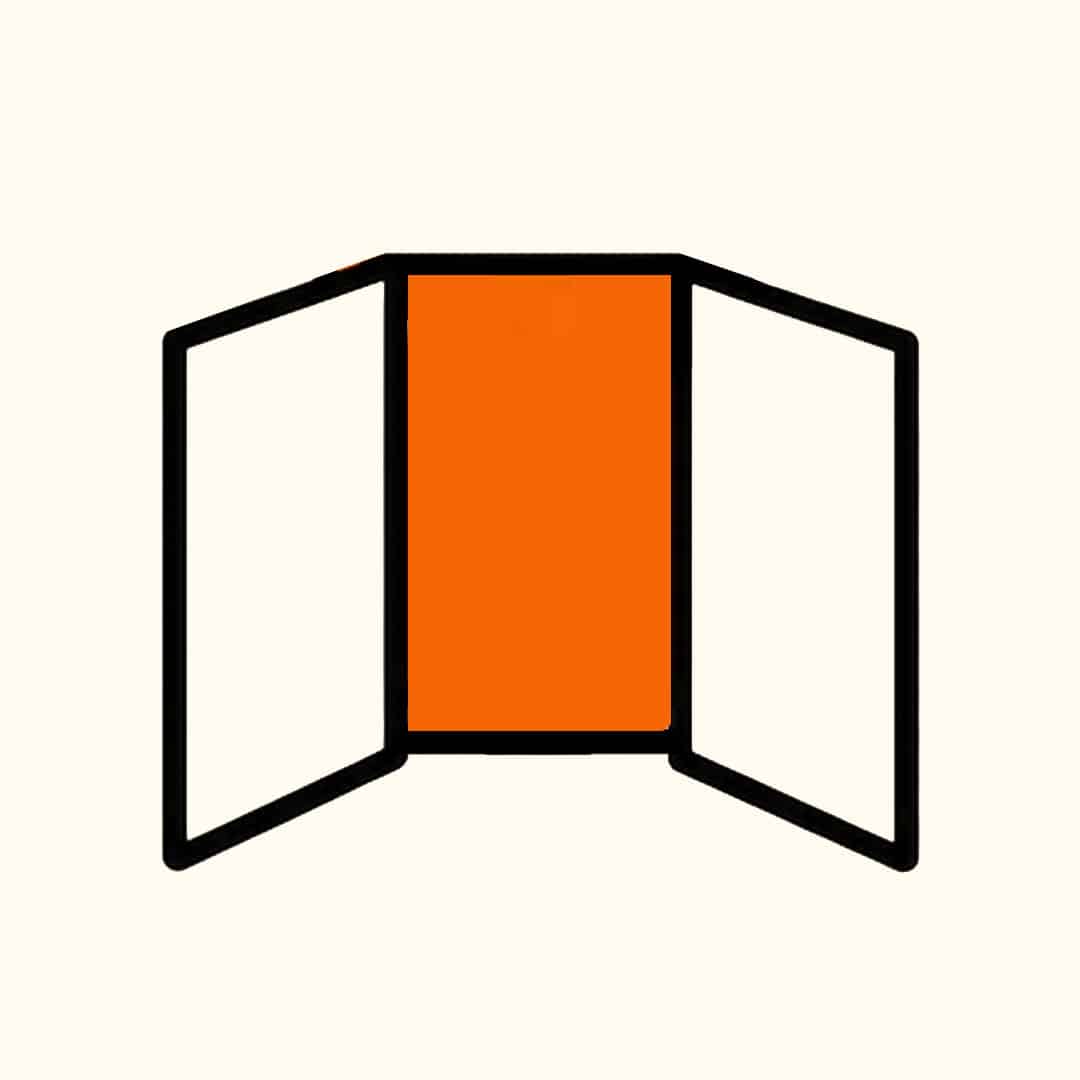

Gate Fold (Double Gate Fold / Closed Gate Fold)
A gate fold folds both outer panels inward toward the center so they meet edge to edge, like a set of gates closing, without overlapping.
| Spec | Detail |
|---|---|
| Panels | 4 panels per side |
| Standard finished size (Legal) | 3.5" x 8.5" |
| Standard finished size (Tabloid) | 4.25" x 11" |
| Recommended flat sheet size | 8.5" x 14" (Legal) or 11" x 17" (Tabloid) |
| Common applications | Invitations, premium brochures, product reveals |
| Design recommendations | Design the two front-facing gate panels to work as a cohesive cover image or message when closed together |
See our custom brochures for gate fold projects.
Roll Fold
A roll fold wraps each panel around the previous one in sequence, rolling the sheet inward like a scroll rather than folding flat.
| Spec | Detail |
|---|---|
| Panels | 4 panels per side |
| Standard finished size (Legal) | 3.5" x 8.5" |
| Standard finished size (Tabloid) | 4.25" x 11" |
| Recommended flat sheet size | 8.5" x 14" (Legal) or 11" x 17" (Tabloid) |
| Common applications | Travel brochures, step-by-step guides, self-mailers |
| Design recommendations | Since each panel rolls inside the next, keep panel content self-contained and avoid designs that span across the fold |
Browse our custom brochures for roll fold layouts.


Accordion Fold
An accordion fold uses a series of parallel folds in alternating directions, so the sheet opens like a fan or an accordion instrument.
| Spec | Detail |
|---|---|
| Panels | 4 panels per side |
| Standard finished size (Legal) | 3.5" x 8.5" |
| Standard finished size (Tabloid) | 4.25" x 11" |
| Recommended flat sheet size | 8.5" x 14" (Legal) or 11" x 17" (Tabloid) |
| Common applications | Menus, maps, event programs, multi-panel product guides |
| Design recommendations | Because the fold direction alternates, test how the piece looks both fully folded and fully extended before finalizing artwork |
Learn more about our event programs, a popular accordion fold format.
Right Angle Fold (French Fold / Quarter Fold)
A right angle fold, also called a French fold or quarter fold, combines one horizontal and one vertical fold at a 90-degree angle, quartering the sheet.
| Spec | Detail |
|---|---|
| Panels | 4 panels per side |
| Standard finished size (Letter) | 4.25" x 5.5" |
| Recommended flat sheet size | 8.5" x 11" (Letter) |
| Common applications | Invitations, greeting cards, compact booklets, notecards |
| Design recommendations | Keep in mind that this fold creates a small, book-like final size, so use larger type and simpler layouts than you would on a flat sheet |
See our note cards and greeting cards for right angle fold applications.
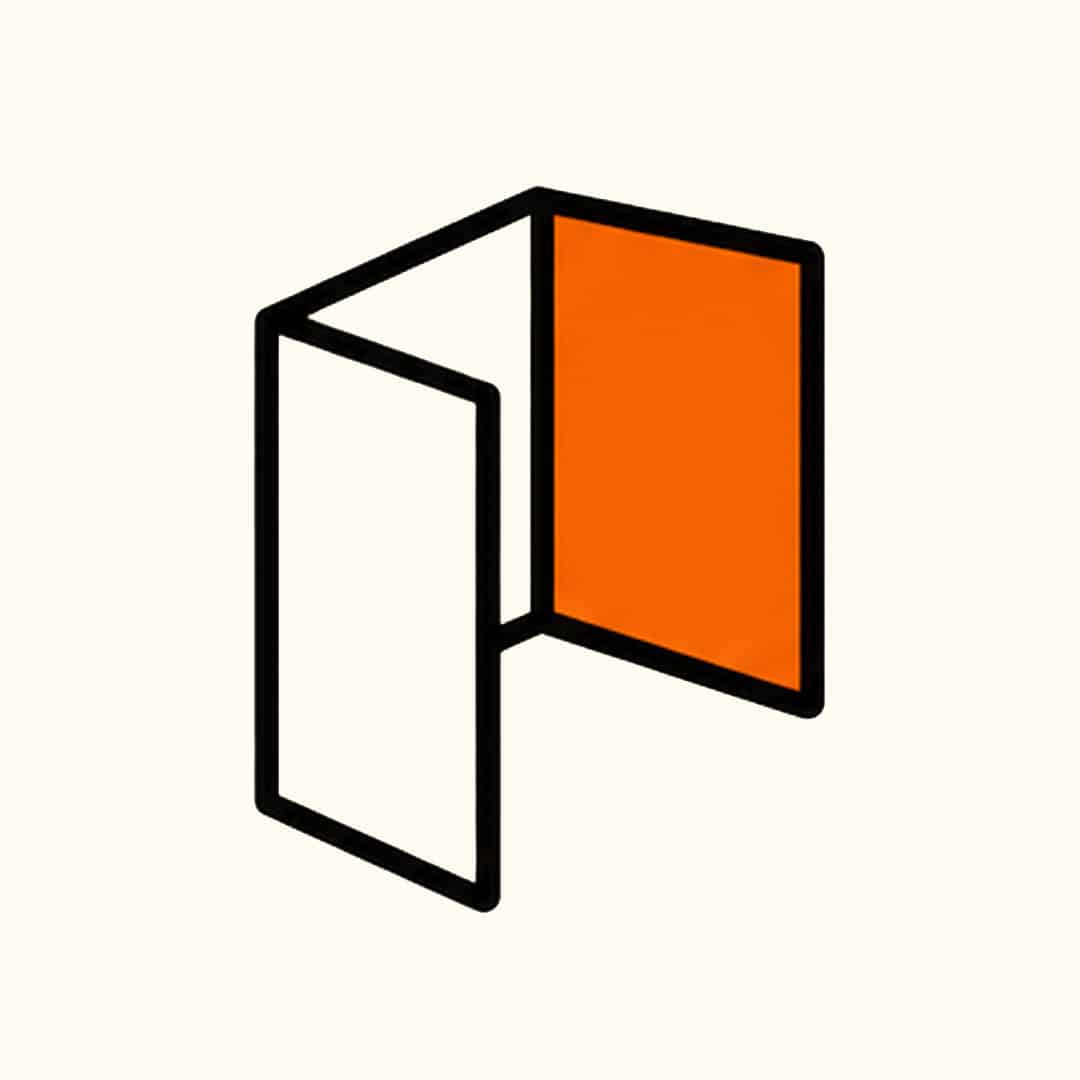

Double Tri Fold (Double Letterfold / Half Then Tri-Fold)
A double tri fold combines a half fold with a tri fold, first folding the sheet in half and then folding the resulting section into thirds. This creates six panels per side and works well for detailed content that needs to be organized into multiple sections.
| Spec | Detail |
|---|---|
| Panels | 6 panels per side |
| Standard finished size (Tabloid) | 3.68" x 8.5" |
| Recommended flat sheet size | 11" x 17" (Tabloid) |
| Common applications | Detailed product catalogs, multi-section guides, larger informational brochures |
| Design recommendations | Plan content in clear sections, since readers will encounter two distinct fold sequences before reaching the full spread |
See our catalog printing for double tri-fold projects.
Insert Fold (Government Fold)
An insert fold, also called a government fold, is designed specifically to fold a large sheet, such as a drawing, chart, or spreadsheet, down to a size that fits inside a binder or manual.
| Spec | Detail |
|---|---|
| Number of Folds | Multiple folds sized to fit within a binder or manual |
| Recommended flat sheet size | Varies by project and original document dimensions |
| Common applications | Inserting large drawings, charts, maps, or spreadsheets into binders and manuals |
| Design recommendations | Coordinate the finished fold size with your binder or manual's page size so the insert tucks in cleanly without extending past the edge |
Pair an insert fold with our binders and manuals.


Prescription Fold
A prescription fold uses multiple small folds customized to shrink a sheet down to a compact size, made to fit inside small packaging.
| Spec | Detail |
|---|---|
| Number of Folds | Multiple folds, customized per project |
| Standard finished size | Sized to fit small packaging (custom per project) |
| Common applications | Product inserts, instructional leaflets, pharmaceutical and packaging inserts |
| Design recommendations | Use small, legible type and prioritize the most essential information, since panel space is limited once fully folded |
| Available customization options | Fold count and finished size can be customized to match specific packaging dimensions |
See our other printing services for custom, project-specific fold work like this.
Tips for Choosing the Right Fold
Picking a fold style is not just a design decision; it affects your paper size, print budget, and how your message is read. Keep these factors in mind before you finalize your layout.
Content Order
Choose a fold that supports the way you want readers to move through your content. Arrange each panel in a clear sequence so the message is easy to follow.
Paper Stock
Consider the weight and thickness of your paper stock before choosing a fold. Heavier stock may need scoring to prevent cracking along the fold line.
Bleed and Safe Area
Keep important text and images away from fold lines and trim edges. Extend background colors and images into the bleed area to prevent unwanted white edges.
Panel Count and Readability
More panels create less space for content on each section. Keep text concise and simplify the layout for folds with multiple narrow panels, such as parallel, roll, and accordion folds.
Mailing Requirements
Consider mailing requirements when choosing a fold for a self-mailer. Check that the finished size, fold style, and paper thickness meet applicable postal requirements.
Budget and Finishing Time
Complex folds may require additional production time and finishing work. Consider your budget and turnaround requirements when selecting a fold.
Talk to our print design team about which fold is best for your next project.